Drops First Anniversary
this blog a few days ago marked a year. The truth is that lately I'm going through so many changes that I remembered in time. But even later, I would like to comment and give thanks for.
What began on a suggestion of coffee, a way to prevent unintended listeners put up with my "war stories", has ended up giving me a lot unexpected joys. The first check readers and comments coming, something that is appreciated among so many good blogs that already exist. The second to see my texts seemed interesting to some of my favorite authors as Alpom , Omalaled , Pjorge , and Patxi Remo and Shora . Last year I scored a lot more interesting authors I've discovered in comments, links to Technorati or other references. Better not mention them, not to forget anyone, but I've left comments when I thought I could contribute. As icing I have been fortunate to be invited to interesting projects such as Hispaciencia and even got a chance to win some money to work with Genciencia .
do not know how well these next year, but I can promise more topics and more entries as soon as I organize a little more. Thanks for being there and hope you like it.
Category: AutoCdB
Sunday, October 29, 2006
Saturday, October 21, 2006
Who Wrought The Book Of Luke
jumping
is interesting how a simple cooking pan can speak of chaotic systems, surface tension and gravity with the help of a drop of water. The experiment is so simple that most certainly you have done even if inadvertently. Dropping a drop of water on a frying pan hot and, in many cases, the drop will begin to jump and move violently across its surface.
It's called the Leidenfrost effect
that in the case of water, takes place on a surface that is 200 - 300 degrees Celsius
. A simplified explanation is that some water will evaporate in contact with the surface, forming a vapor layer. The surface tension attracts other molecules forming a drop whose characteristics depend on the liquid and the surface. And the gravity, in addition to affecting the shape of the drop, keeps bonded to the surface preventing exit off like a rocket. So steam can escape only by the edges, resulting in chaotic motion of the drop in the opposite direction.
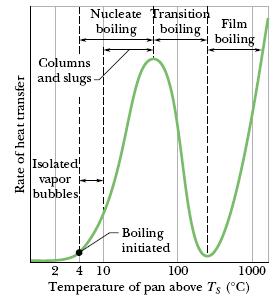
And why does not evaporate all the water at once? This is because the steam has a heat transfer capacity of relatively low at these temperatures. In the graph we can see how they vary depending on the temperature of the contact surface. Shortly before 100 degrees begins to decrease reaching a minimum between 200 to 300 degrees. Is an effect that can be very dangerous. For example in a heat exchanger could be increasing temperature and decreasing the transmission heat to cause serious damage to the device.
few months ago, the Leidenfrost effect became popular when researchers at the University of Oregon discovered how to use the motion of liquid droplets to cool hot surfaces
as computer chips. They used a surface with a profile similar to a saw that what they "ran" out of steam and thus the movement of the drop.
More information on the page
research group that discovered it. Below you can see a very cortito video of how it works.
I recommend you see this more detailed picture drawn by the New York Times
, explaining the effect and its applications in the other direction you can find a collection of videos to slow motion on the movement of various fluids such as water or liquid nitrogen.
As you can see is a fun, but probably too inefficient to directly convert heat into motion. And as a cooling system has the advantage that it does not need pumps or moving parts. A little ingenuity and the laws of physics do all the work.
Category: Physical
is interesting how a simple cooking pan can speak of chaotic systems, surface tension and gravity with the help of a drop of water. The experiment is so simple that most certainly you have done even if inadvertently. Dropping a drop of water on a frying pan hot and, in many cases, the drop will begin to jump and move violently across its surface.
It's called the Leidenfrost effect
few months ago, the Leidenfrost effect became popular when researchers at the University of Oregon discovered how to use the motion of liquid droplets to cool hot surfaces
More information on the page
I recommend you see this more detailed picture drawn by the New York Times
As you can see is a fun, but probably too inefficient to directly convert heat into motion. And as a cooling system has the advantage that it does not need pumps or moving parts. A little ingenuity and the laws of physics do all the work.
Category: Physical
Sunday, October 8, 2006
Too Short Concert January 2010 Fresno
Psychologists, engineers and reality
I've spent the last nine years working surrounded by psychologists, a strange experience for an engineer like me, but that has proved very interesting and enriching. Now I'm going to leave, I think it is time to talk a little bit of psychology as a science.
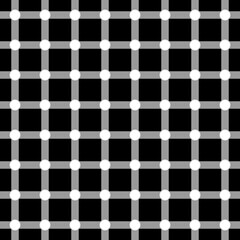
I think the most interesting I've learned from them is the infinite flexibility of what we call "reality." We are generally aware of the limitations of our "sensors." Not everyone's ear a musician. Many need glasses. Internet is full of optical illusions images
more or less surprising. However, once the information reaches the brain senses, we assume that is analyzed with precision and accuracy. We believe it is the perfect computer but we are looking for engineers that trust is a mistake.
good psychologists as scientists conduct experiments to examine our reasoning. They are similar to medical experiments, including ethics committees, and has the same difficulty to find out what's going on really. That makes the results even more meritorious. First experiment
(1): hypnotized a person to get on the road with raincoat on a sunny day of summer. Then, once awake, I wonder why it has. Usually try to justify themselves by recalling that summer time is variable, which in the evenings cooling or really did not feel heat. And most likely come to believe his own explanation. This example can be replaced by any other activity that can hurt us but we got successfully justify. For example, smoking, lack of exercise, overeating, or suffer from anorexia. We try to justify what we do not consider whether it is reasonable or should change.
Second experiment
: We are in 1954, we choose a camp for Boy Scouts and divided the children into two groups. We create a team spirit within each one and then put them to compete among themselves. This reinforces the bonds of their own group and begin to create hostility toward the other. Soon any insignificant event will be misinterpreted and generate even more hostility may reach violent clashes. Fifty years later, can I recall a game show?. Not to mention politics in general.
Third experiment: Choose who you like best between these two:
Did you decide? Maybe you should know that it says exactly the same for both, only changed the order. But in general, more people prefer to July. The way of presenting the information may change completely our perception even say the same thing. This kind of tricks is that the advertisers love.
In all these cases just misinterpreting reality because of our need to justify themselves, to some preconceived ideas (us and them) or
primacy effect, also called "the first impression that counts." In short, it is not easy to analyze the reality and needs to be aware of all biases and errors that we commit to do so. Our brain is not perfect.
I hope to have learned all this let me be a little better person. In any case nine years have been great and, although I think the change is better, I'll miss you all, both psychologists and no.
(1) The examples are drawn from "
The social animal" by Elliot Aronson
. A book very, very advisable not to think, in all, a self-help manual. (Thanks and sorry for Eduardo simplifications)
I've spent the last nine years working surrounded by psychologists, a strange experience for an engineer like me, but that has proved very interesting and enriching. Now I'm going to leave, I think it is time to talk a little bit of psychology as a science.
I think the most interesting I've learned from them is the infinite flexibility of what we call "reality." We are generally aware of the limitations of our "sensors." Not everyone's ear a musician. Many need glasses. Internet is full of optical illusions images
good psychologists as scientists conduct experiments to examine our reasoning. They are similar to medical experiments, including ethics committees, and has the same difficulty to find out what's going on really. That makes the results even more meritorious. First experiment
(1): hypnotized a person to get on the road with raincoat on a sunny day of summer. Then, once awake, I wonder why it has. Usually try to justify themselves by recalling that summer time is variable, which in the evenings cooling or really did not feel heat. And most likely come to believe his own explanation. This example can be replaced by any other activity that can hurt us but we got successfully justify. For example, smoking, lack of exercise, overeating, or suffer from anorexia. We try to justify what we do not consider whether it is reasonable or should change.
Second experiment
- July is intelligent, industrious, impulsive, critical, stubborn, and envious
- Ramon is envious, stubborn, critical, impulsive, hardworking and intelligent.
Did you decide? Maybe you should know that it says exactly the same for both, only changed the order. But in general, more people prefer to July. The way of presenting the information may change completely our perception even say the same thing. This kind of tricks is that the advertisers love.
In all these cases just misinterpreting reality because of our need to justify themselves, to some preconceived ideas (us and them) or
I hope to have learned all this let me be a little better person. In any case nine years have been great and, although I think the change is better, I'll miss you all, both psychologists and no.
(1) The examples are drawn from "
Subscribe to:
Posts (Atom)